BROWN BULLHEAD
Ameiurus nebulosis
- Name and Family
- History
- Distribution
- Impacts
- Identification
- Potential Lookalikes
- Biology
- Life Cycle
- Pathways of Spread
- Prevention
- Acknowledgements
- Image Gallery
Name and Family
Brown bullhead, Ameiurus nebulosis, is a member of Ictaluridae, a family of North American freshwater catfish. This family is also collectively called “ictalurids”.
History
The Brown bullhead catfish is a ray-finned fish native to the Atlantic and Gulf regions of Canada, such as Nova Scotia, New Brunswick, Quebec and the Great Lakes. It is thought they were introduced to Prince Edward Island through live bait and/or released as a sport fish for angling. They have currently been reported in three waterbodies across Prince Edward Island.
Identification
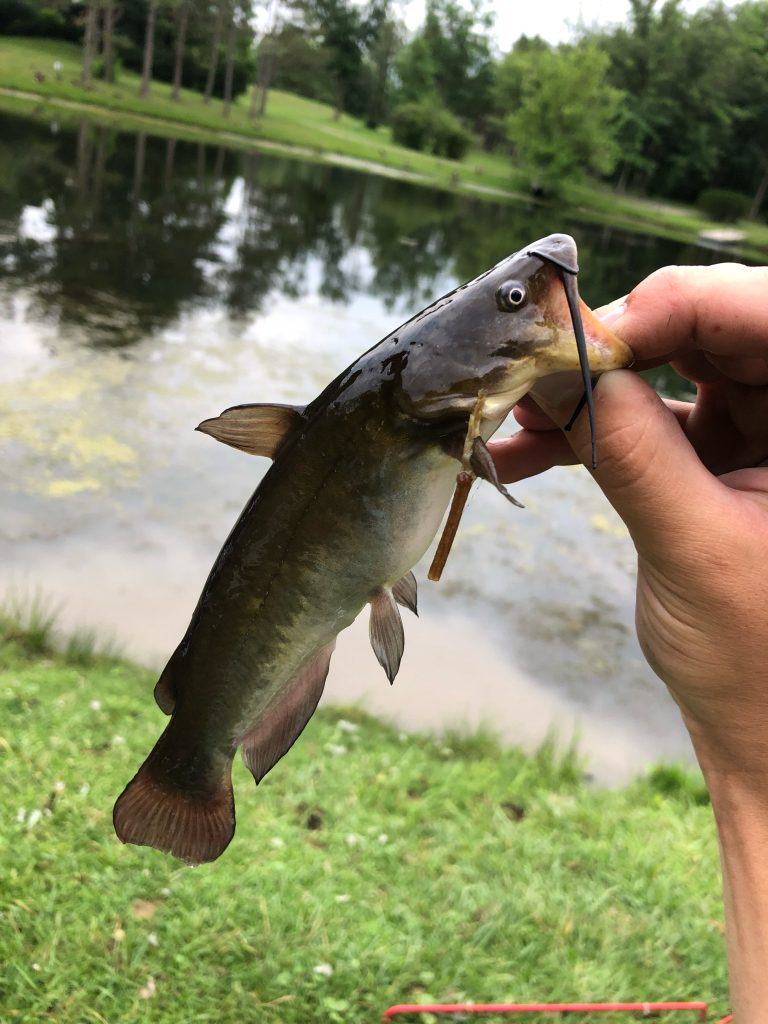
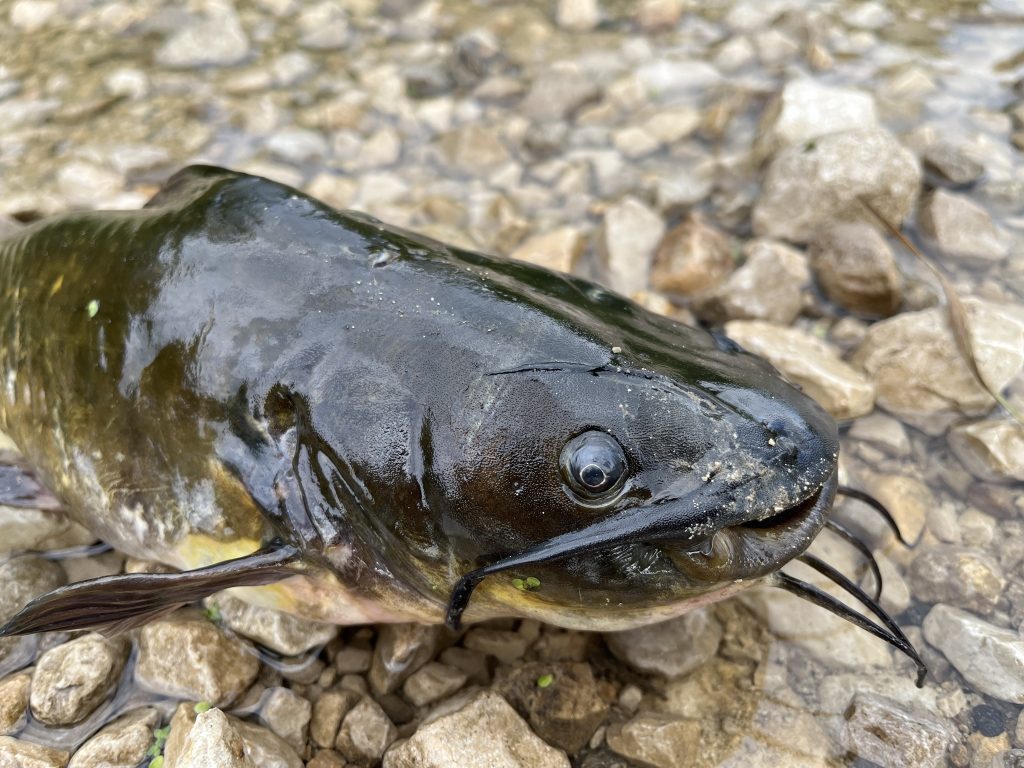
- Rotund fish with an arched back
- Distinct bump on the back of flat head
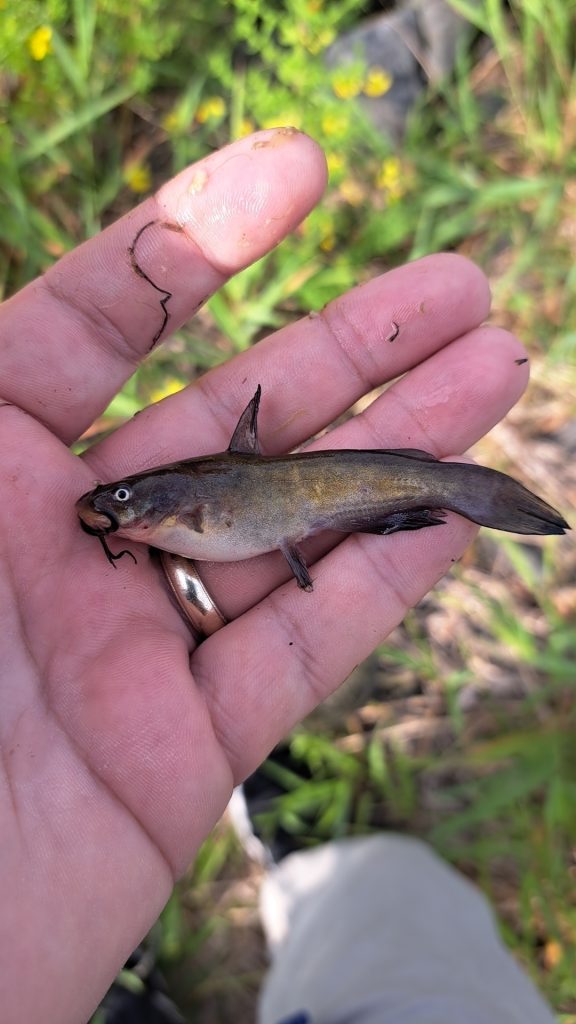
- Dark brown with mottled, paler sides
- Yellow head and jaw
- Cream/grayish coloured underbelly
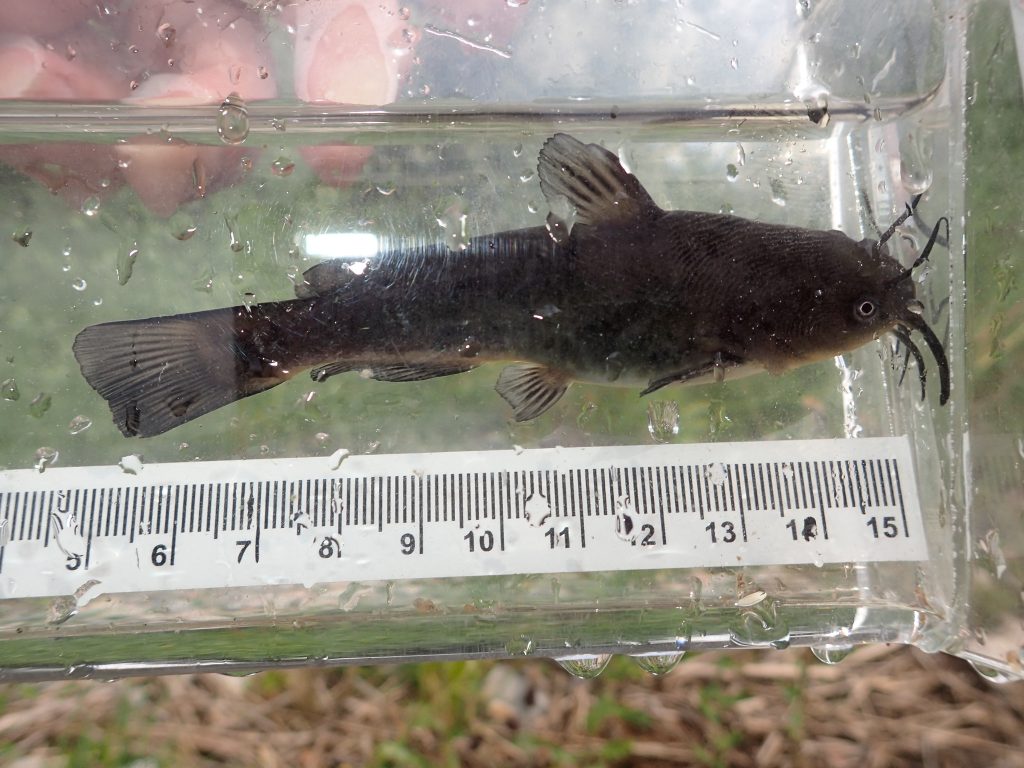
- Four pairs of barbels that range from dark brown to black: one pair on their chin, a pair between their eyes, and one at each corner of the mouth
- Lightly coloured tips of the chin barbels
- Scaleless fish with leathery, thick skin
- Caudal fin has 18-19 rays
- Dorsal fin has 6-7 rays
- Dorsal fin, anal fin and caudal fin all have one spike
Potential Lookalikes
Brown bullheads can be easily misidentified as black bullheads and yellow bullheads. No bullheads are native to Prince Edward Island.
Yellow bullheads have barbels that are lighter in colour (off-white) than those of the brown bullhead. Yellow bullheads commonly exhibit a mustard yellow underbelly, while brown bullheads have a creamy white underside.
Black bullheads have a light brown stomach, as opposed to the creamy white underside of the brown bullhead. The sides of the black bullhead catfish are blotched, while the sides of the brown bullhead are evenly coloured.
Impacts
Environmental Impacts
Brown bullheads are carriers of a fatal bacterial disease called haemorrhagic septicaemia, commonly known as HS. While this disease is most known for causing mass mortality in cattle, it has also been linked to large fish kills in the Great Lakes.
Brown bullheads may also compete with native fish for food and habitat. Studies have shown that brown bullhead catfish can reduce populations of native prey in waterbodies, because their territorial behavior during spawning season discourages native fish from hunting and foraging in locations where brown bullheads are nesting. Bullheads are rarely viewed as prey by native fish due to their ability to flex their spikes outward, making it extremely difficult to swallow the species. According to the Smithsonian Environmental Research Centre, the aggressive nature of this invader has caused four endemic species of Sticklebacks to go extinct in Vancouver Island.
Economic and Social Impacts
The anal fin, dorsal fin, and caudal fin all have one spike which can cause painful injuries. This can pose a risk for swimmers and anglers, and could impact recreational activities within waterbodies with brown bullhead populations.
Biology
Brown bullheads are omnivores. They are considered to be both a predator and scavenger that uses its barbels to locate food. Their diet includes snails, fish eggs, plant material, insects, leeches, crayfish and small fish. The diets of juvenile brown bullheads primarily consist of midge flies and may flies.They are considered an extremely resilient species due to their ability to tolerate a wide range of environmental conditions- capable of surviving many days out of water, if their bodies remain moist. They are also capable of thriving in water bodies with low oxygen. Although they are a freshwater species, Brown bullheads have the ability to thrive in brackish environments. Their ideal habitat consists of still or slow moving water bodies with vegetation and silty or muddy substrate. However, they are capable of surviving in most freshwater areas where they are introduced. They can survive in depths up to 40 metres, and temperatures over 31 degrees celsius. They are known to burrow themselves into mud when conditions are dry.
Life Cycle
The typical lifespan of brown bullheads reaches up to 8 years. Brown bullheads become sexually mature in approximately 2 to 3 years. Spawning typically occurs in late spring or early summer. Nests can be built by both the female and/or male fish by creating a depression in the silt or mud. One or both of the parents guard the eggs, and use their barbels to stir the eggs to increase survival rate. This species is also known to gather eggs in their mouth and spit them out to stimulate the hatching process, which occurs approximately one week after spawning. In colder climates such as Prince Edward Island, bullheads are commonly found overwintering in the mud in order to survive the harsh season.
Prevention
Brown bullheads are extremely difficult to eradicate from a waterbody once they are introduced. Electrofishing may be done to manage the population. The greatest tool is prevention! After removing a watercraft from the water, follow the Clean, Drain, Dry process to prevent the spread of invasive species into the next waterbody you visit.
- Clean: Remove all plants, animals, and debris from the vessel and equipment.
- Drain: Drain bilge and ballast waters from the watercraft.
- Dry: Allow your watercraft and gear to dry completely before using it in another waterbody.
- Dispose: Properly dispose of unused bait in a garbage bin on land.
- NEVER release fish or plants into the environment unless they originated from that water body.
Acknowledgements
This webpage was developed with the financial support of the Department of Fisheries and Oceans Canada through the Aquatic Invasive Species Prevention Fund.
Image Gallery