YELLOW NUTSEDGE
Cyperus esculentus
- Name and Family
- History
- Identification Guide
- Impacts
- How it Moves
- Management
- Biosecurity
- Image Gallery
- References
Name and Family
Yellow nutsedge, Cyperus esculentus, is a member of the sedge family (Cyperaceae).
History
Yellow nutsedge is believed to originate in Southwest Asia, but its origins are indistinct. It was used as a food crop in ancient Egypt as far back as 16 000 B.C. Today it is found in most of the Eastern hemisphere and from Argentina to Canada in the western hemisphere. It was first observed on Prince Edward Island in 2023. The plant has a variety of traditional uses, with the first recorded introduction to North America in 1854 for use as a vegetable crop. Other uses include use in a tea, for its oil, as fishing bait, and as a fumigant.
Identification Guide
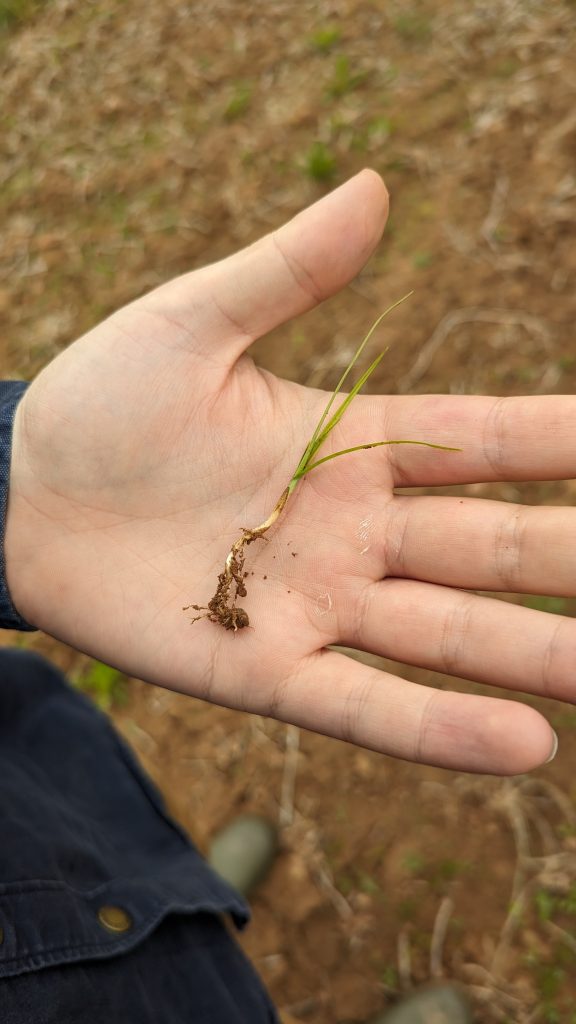
- Highly invasive perennial herb, may behave as an annual.
- Sprouts begin to appear in late April to early May and persist until killed by frost near the beginning of Winter.
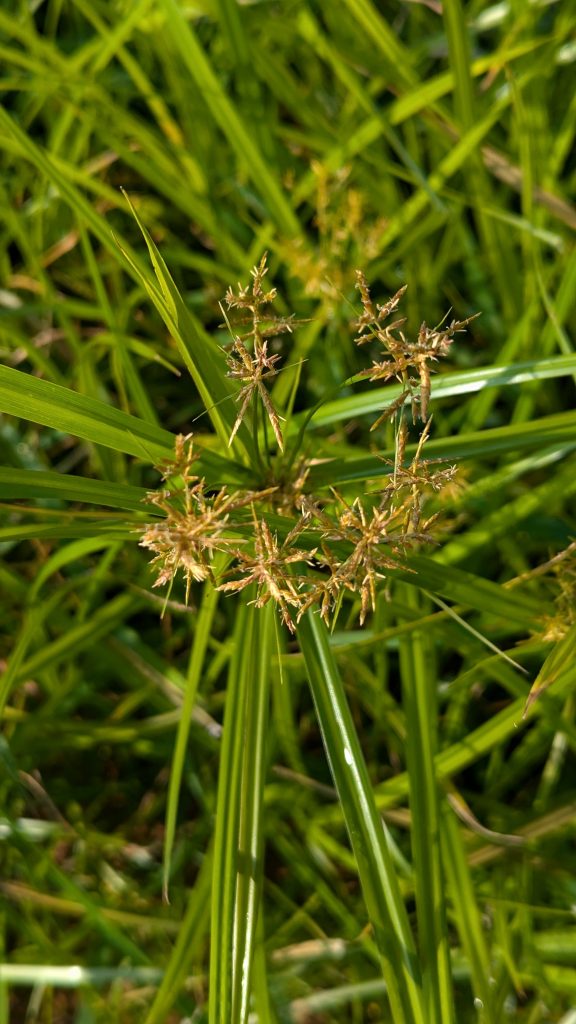
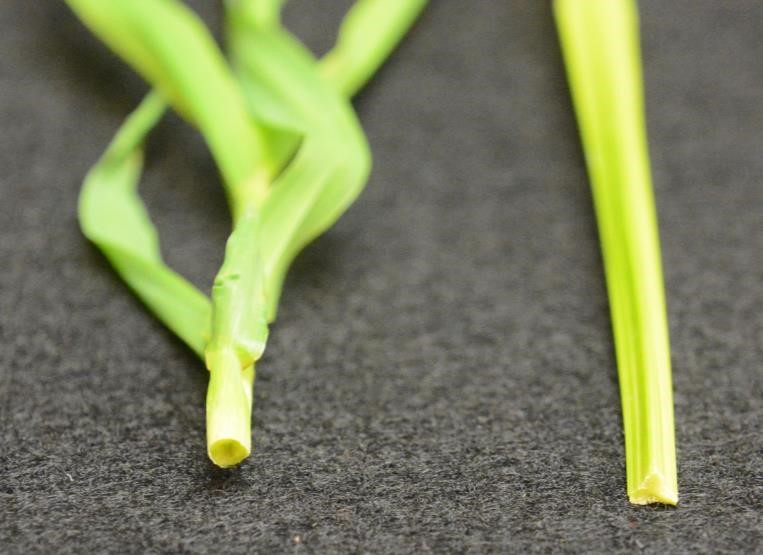
- Distinct triangular orientation of the uppermost (apical) plant parts and a triangular stem.
- Low-growing (up to 2.5ft), can survive in a mowed lawn.
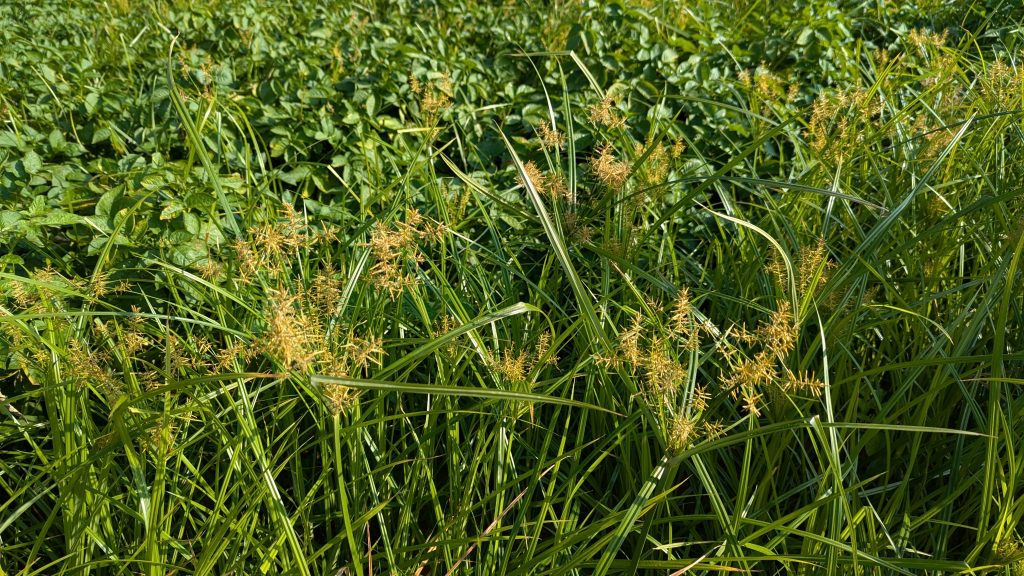
- Feathery, golden yellow flowers bloom in midsummer, producing brown, football-shaped seed in late summer- early fall.
- Prefers moist or mesic soils.
-
- Layered array of long, slender leaves at the base of the plant.
- Leaves have a yellowish hue, a waxy coating, and a strongly defined midrib.
- Yellow nutsedge produces tubers called nutlets. One tuber has been shown to produce an average of over 700 new tubers each season. In an extreme case, one tuber may give rise to 1,700-3,000 shoots and 19,000-20,000 new tubers over four months.
- These tubers are harvested as a crop called “tiger nuts”, which is the reason for their initial introduction to North America.
- Yellow nutsedge tends to occur in clustered patches.
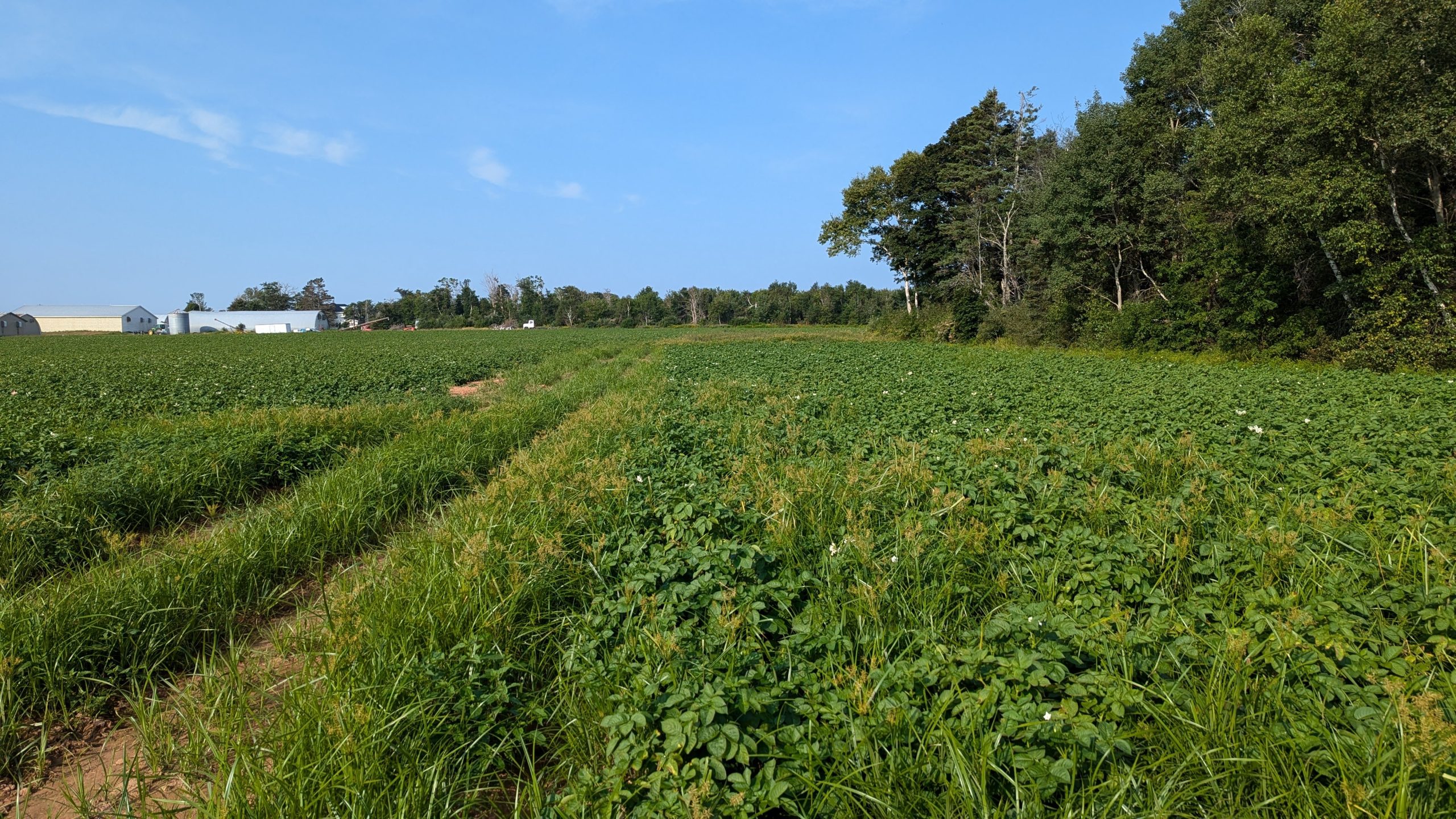
- Especially an issue in agricultural areas, riverbanks, and other disturbed sites.
Impacts
- Ranked as the 16th worst weed globally.
- Significant impacts to agricultural systems for potatoes, soybeans, sugarbeets, corn, etc.
- Yield loss varies between crops, but yellow nutsedge has marked impacts on low-growing crops in particular.
- If the plant is not controlled, it may become a significant issue in some of PEI’s most widely planted crops.
- When yellow nutsedge emerges with the crop, losses are higher.
- Losses are heavier when yellow nutsedge is heavily irrigated and when it has access to an abundant supply of nitrogen.
- Rapidly fills in gaps in fields and occurs at high density when other weeds are controlled.
- The plant is not known to be highly invasive in natural areas where native plant competition is high.
- Yellow nutsedge releases chemicals into the soil which reduce growth of nearby plants.
How it Moves
- Spreads predominantly by vegetative reproduction.
- Movement of contaminated soil on field equipment is the most common source of spread.
- Cultivation can distribute tubers within fields and from field to field. Tubers are also mixed throughout the soil, making management challenging.
- If you have yellow nutsedge in a particular field and must still work that field, work it LAST after working uninfested fields to prevent further spread to uninfested areas. Clean equipment after working infested fields ideally before leaving the field and definitely before using the equipment elsewhere.
- Soil mixing causes more spread than soil adhering to equipment.
- Spread in root crop systems is extreme due to the large amount of soil transported during harvest.
- Like farming equipment, construction materials and equipment can also be a source of spread.
- The movement of other contaminated substrates and soil amendments such as gravel, sand, compost, manure, etc. can spread yellow nutsedge.
- Nursery activities can be a source of spread. Yellow nutsedge is believed to have been introduced with a packaged soil amendment or nursery stock on PEI. Movement of soil both packaged and potted for sale with live plants is a source of spread.
- Spread through contaminated animal feed, and where the plant is used as animal feed, has been observed.
- Natural dispersal is usually minor, but mice may move tubers, and periods of high surface water runoff can carry reproductive parts long distances.
Management
Mechanical Control
- Tilling yellow nutsedge is generally not recommended. This is due to the significant potential for spread and dispersal of tubers both within the infested fields and to other fields where infested soil is carried from field to field through contaminated equipment.
- Mowing may prevent seed production, but will not eliminate yellow nutsedge or prevent spread due to the plant’s varied modes of reproduction. Mowing may also spread the plant by spraying around fragments. If mowing, equipment should be cleaned after use on yellow nutsedge before use elsewhere to prevent spread.
Cultural Control
- Crop losses are highest when crops emerge around the same time as yellow nutsedge. Scheduling early planting in crop systems can assist with crop competitiveness against yellow nutsedge. Crop losses are highest in poorly competitive and low-growing crops.
- Narrow row spacing can give crops a competitive edge as they will be better able to compete by shading out yellow nutsedge.
Solarization
- Solarization is the process of using a clear plastic or polymer sheeting to increase soil temperatures. Soil temperature is increased by sunlight radiating through the sheeting to the point where temperatures could become lethal for yellow nutsedge.
- Increased soil temperature may, over time, kill yellow nutsedge.
- Cover the affected area with a clear sheeting and secure the edges by weighing them down or burying them.
- If burying be wary of the potential transfer of yellow nutsedge away from the site in soil that may be transported away where it adheres to equipment, clothing, or vehicles.
- Solarization projects for yellow nutsedge should begin from May and extend through to early October.
- This process is non-selective, and will kill any vegetation below the covering that is heat susceptible.
- Requires sustained high temperatures raised to a lethal level (>50 degrees Celsius) for a long period of time, and thus may be less effective during cooler summers.
- This method does not guarantee complete control, and multiple years of treatment will likely be necessary for eradication.
Anaerobic soil disinfestation
- The PEIISC is currently studying the potential of using a novel control method on known populations of yellow nutsedge.
- This process involves the use of natural soil microbes and an artificial anaerobic environment to cause decay.
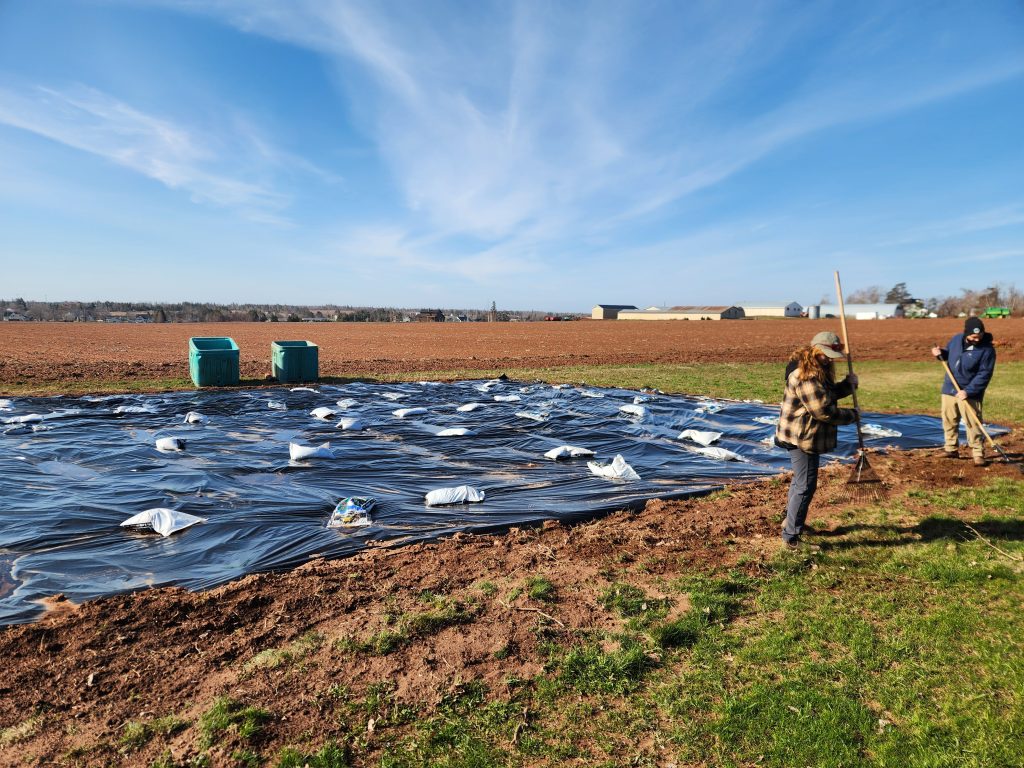
- In our trial, we cleared sharp objects from the affected area and laid down an organic nutrient source to feed soil microbes and promote their development. The nutrient source we used was mussel offal.
- After spreading the substrate, we rototilled the area to mix the nutrient source in and saturated the area with water using a hose.
- We dug a trench around the perimeter of the affected area and covered the area with a water and air tight membrane. In this case we used 6mm thick silage plastic with the black side facing up. The membrane must be water and air tight and thus plastic sheeting is recommended. The edges of the membrane were then buried, and weights were dispersed over the area. The weights should use a non-abrasive material, like bags of soil, to avoid puncturing the membrane. We recommend soft sandals or sock/bare feet for walking on top of the tarp as well to avoid puncturing the membrane.
- The setup can then be left in place for the remainder of the growing season.
- While results have not yet been finalized in our trial, initial findings are promising.
Chemical control
- Chemical control is the method of control most recommended by the PEI Invasive Species Council.
- Product selection will depend upon regulatory approval, crop species, site, and other factors.
- Yellow nutsedge can be controlled with both pre and post emergence herbicides.
- For specific chemical control options relevant to your situation, reach out to Certified Crop Advisor or a Professional Agrologist.
- When working with a chemical control product such as an herbicide, it is crucial that all local legislation and manufacturer’s instructions be followed during storage, transport, handling, preparation, and application.
- Herbicides registered for use against yellow nutsedge in Canada include halosulfuron, s-metolachlor, and dimethanamid-P.
Biosecurity
- When working with invasive species like yellow nutsedge, it is important to make considerations during management to prevent the spread of the plant.
- As discussed above in the “How it Moves” section, yellow nutsedge can easily spread from field to field on contaminated equipment, vehicles, footwear, and clothing.
- As an added precaution, move equipment to fields that may have nutsedge last, to remove the chance of spread to unaffected fields.
- Before leaving an area or moving equipment or vehicles used in soil containing yellow nutsedge, completely wash off all soil and organic debris to prevent spreading yellow nutsedge.
- Clean footwear and clothing of any mud or organic debris that could contain reproductive parts of yellow nutsedge.
Reporting
- Quick reporting and swift action to invasive species establishment is key to a successful response.
- If you have seen, or suspect you have seen, yellow nutsedge on PEI, report your findings to the PEIISC immediately.
- Send reporting information to peiinvasvies@gmail.com.
- Include the location of your find, your contact information, the date you found the invasive species, and photos of your observation.
- PEIISC staff will review your report, confirm the identity of the plant, and provide instructions on how to proceed.
- Ensure you do not remove any yellow nutsedge from the area, and use the biosecurity measures listed above.
Image Gallery

References
Biological flora of Central Europe: Cyperus esculentus L. – ScienceDirect
THE BIOLOGY OF CANADIAN WEEDS. 17. Cyperus esculentus L.
Yellow Nutsedge | Government of Prince Edward Island
Yellow Nutsedge (Cyperus esculentus) – bplant.org
Yellow nutsedge (Cyperus esculentus) | Fraser Valley Invasive Species Society